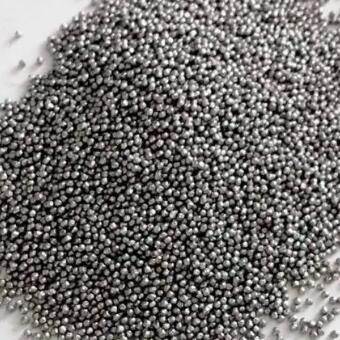
Steel shot is commonly used for descaling and rust removal of steel workpieces before coating, and centrifugal shot blasting equipment is often used in this situation.
Steel shot is commonly used for descaling and rust removal of steel workpieces before coating, and centrifugal shot blasting equipment is often used in this situation.
Steel shot effectively improves the fatigue resistance of workpieces and is a commonly used material for treating metal workpieces. Steel shot has a dense structure and uniform particle size. Treating the surface of metal workpieces with steel shot increases surface pressure.
After quenching and heating, steel undergoes two cooling methods: isothermal cooling (isothermal quenching) and continuous cooling (ordinary quenching).
Counterweight steel grit is an important raw material in powder metallurgy. Its industrial production and application began in the 1920s. At that time, electrolytic and carbonyl counterweight steel grit produced in Germany were mainly used as catalysts in the chemical industry.
Shot peening is a process that uses high-speed jets of strengthening steel shot to impact the surface of a workpiece, thereby improving some of its mechanical properties and altering its surface condition. Shot peening can improve the mechanical strength, wear resistance, fatigue resistance, and corrosion resistance of parts.
Steel grit is mainly produced by melting and reducing high-alumina bauxite, anthracite, and iron filings at high temperatures in an electric arc furnace.
The process of steel shot granulation is the focus of the entire process, and currently the main methods are impact method, centrifugation method, and atomization method.
The shot blasting process in casting requires an effective ratio of steel shot and steel grit to produce qualified products. So, how should steel shot and steel grit be proportioned? As the shot blasting process in casting progresses, a large amount of steel grit flies out through the gaps in the chamber of the hook-type shot blasting machine.